Sanket
Sanket
Sanket
System Design
System Design
System Design
2024
2024
2024
4 Weeks
4 Weeks
4 Weeks
Team Project
Team Project
Team Project
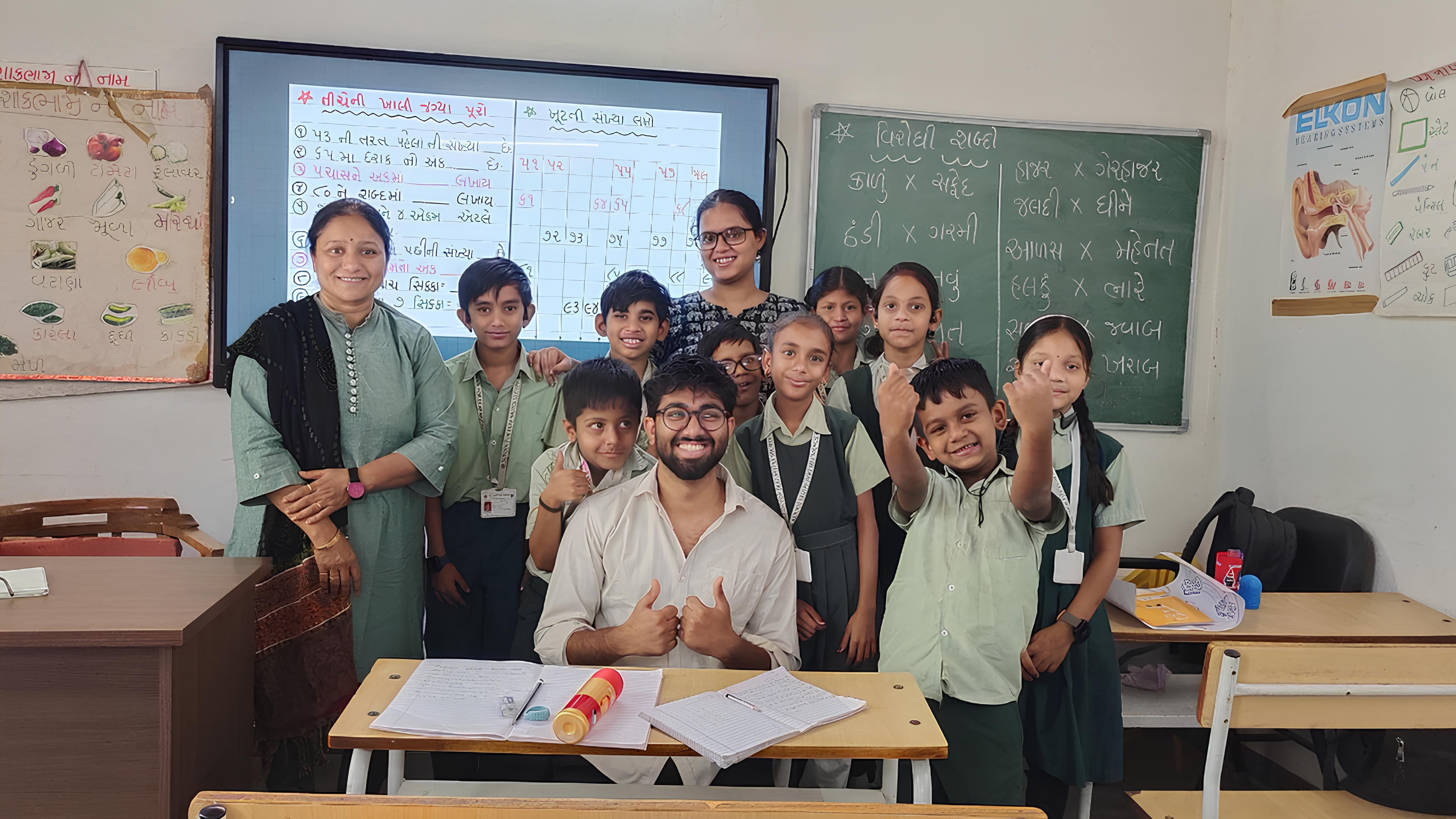
An NCERT initiative making classrooms inclusive through Indian Sign Language. The project below is a case study, it’ll take you about 10 minutes to read through.
An NCERT initiative making classrooms inclusive through Indian Sign Language. The project below is a case study, it’ll take you about 10 minutes to read through.
An NCERT initiative making classrooms inclusive through Indian Sign Language. The project below is a case study,
it’ll take you about 10 minutes to read through.
The Story
Let’s start with a number that might surprise you over 63 million people in India use sign language every single day. That’s about as many as those who speak Marathi.
Big number, right? And yet, walk into most schools and you’ll find no sign of Indian Sign Language (ISL) anywhere. No lessons. No trained teachers. Nothing. So while deaf students are perfectly capable, it’s society that’s failed to give them a language everyone can meet them in.
Deaf schools try they really do but the moment these kids step outside, it’s like landing in a country where no one understands you. They’re not isolated because of who they are; they’re isolated because the rest of us never learned to listen differently.
Now, imagine if ISL was just another subject in school. Like English or Hindi. Imagine growing up seeing everyone around you use their hands to say hello, to ask, to connect. That’s not just language. That’s inclusion. That’s empathy in action. And that’s where Sanket comes in. It starts from a simple, urgent belief: communication shouldn’t be a privilege it should be a right.
Let’s start with a number that might surprise you over 63 million people in India use sign language every single day. That’s about as many as those who speak Marathi. Big number, right? And yet, walk into most schools and you’ll find no sign of Indian Sign Language (ISL) anywhere. No lessons. No trained teachers. Nothing. So while deaf students are perfectly capable, it’s society that’s failed to give them a language everyone can meet them in.
Deaf schools try they really do but the moment these kids step outside, it’s like landing in a country where no one understands you. They’re not isolated because of who they are; they’re isolated because the rest of us never learned to listen differently.
Now, imagine if ISL was just another subject in school. Like English or Hindi. Imagine growing up seeing everyone around you use their hands to say hello, to ask, to connect. That’s not just language. That’s inclusion. That’s empathy in action. And that’s where Sanket comes in. It starts from a simple, urgent belief: communication shouldn’t be a privilege it should be a right.
User Research and Observations
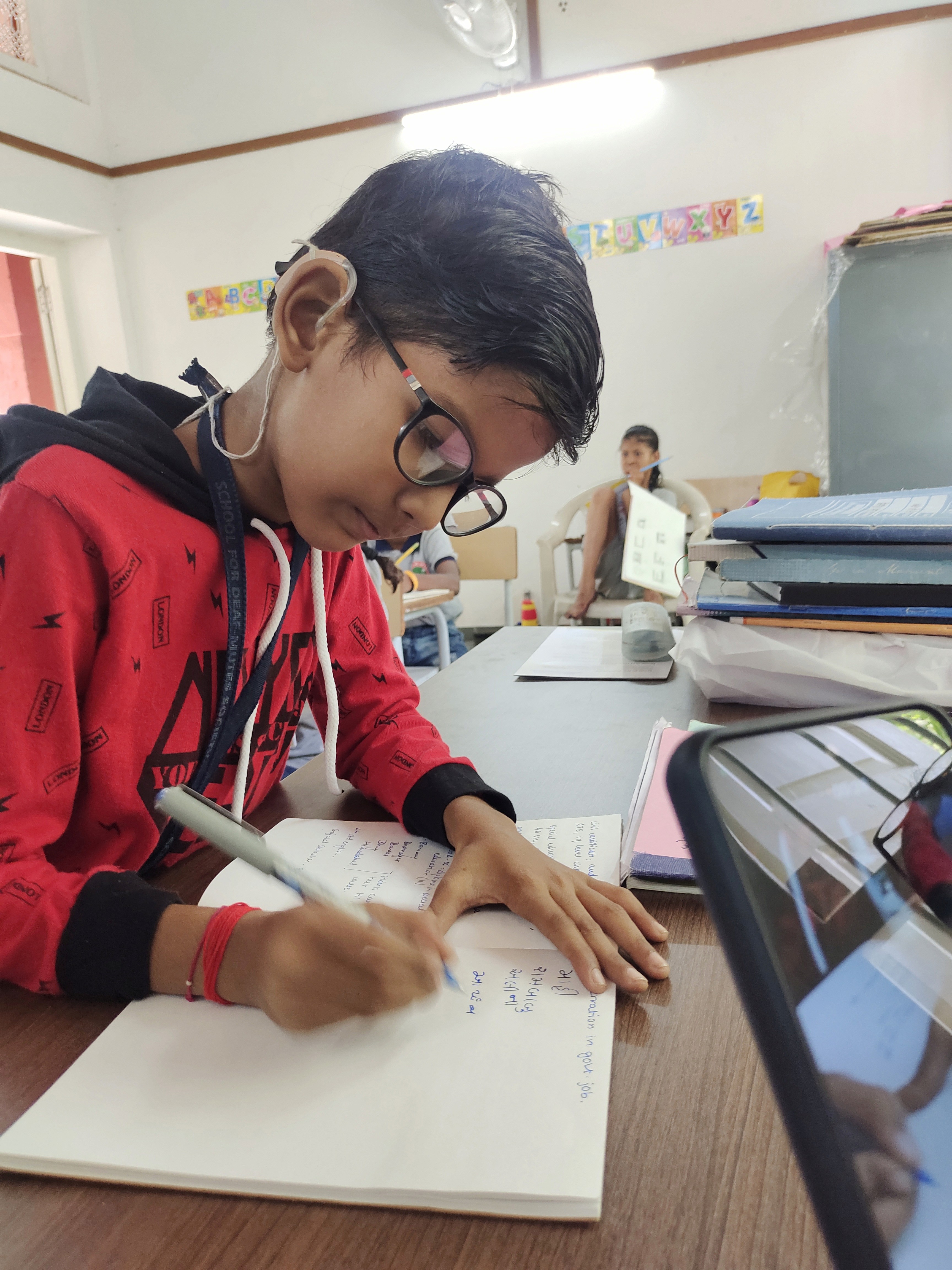
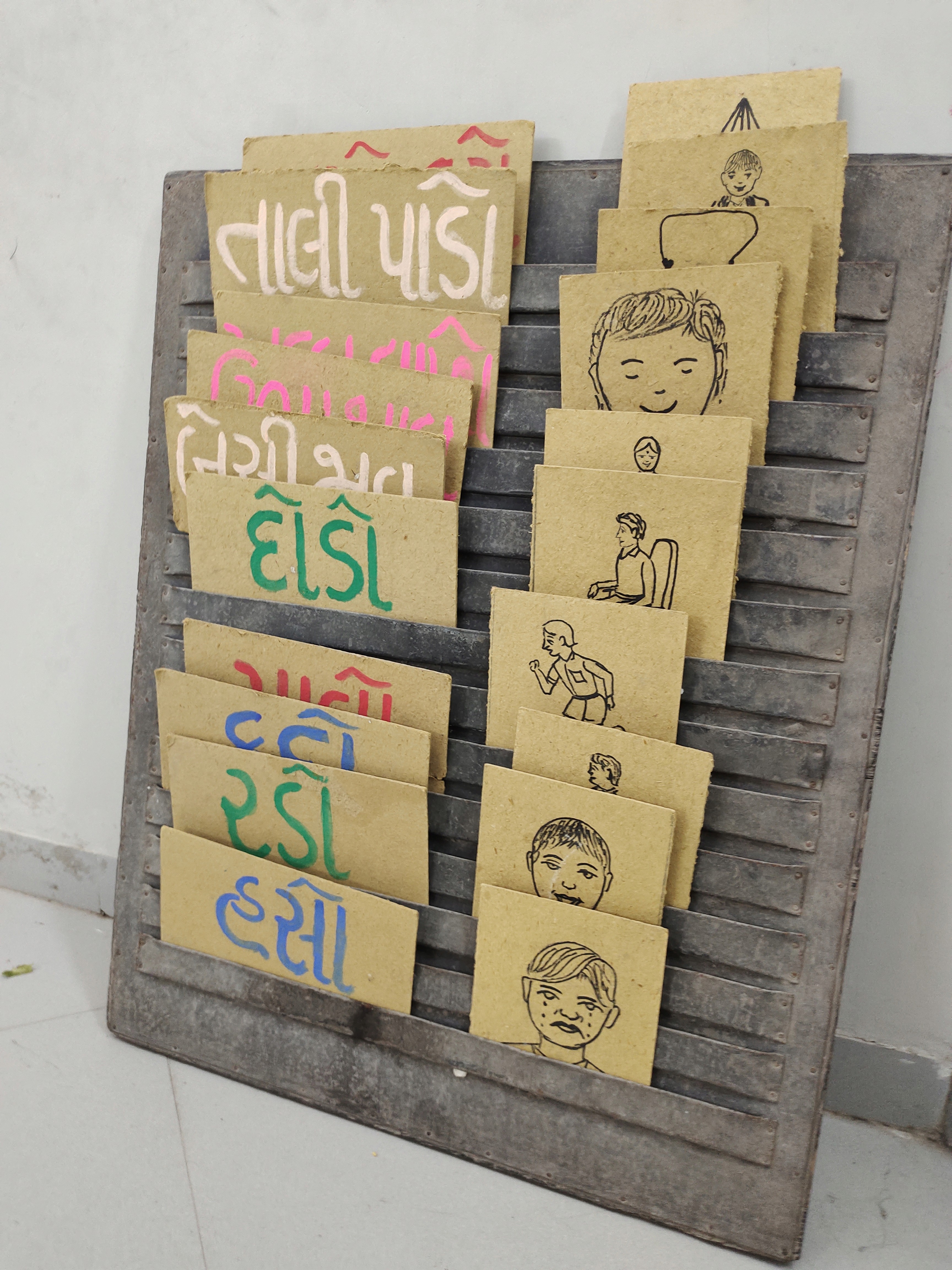
You can only learn so much from numbers, right? So we decided to go where the real story lives inside classrooms. We spent time at the School for the Mute and Deaf in Ahmedabad (yep, the one on Ashram Road opposite Times of India). Watching the students sign, seeing how teachers managed lessons, and just sitting in that space taught us more than any article ever could. The energy in the school was beautiful, but it also revealed the gap the moment these kids step out of that gate, the world stops understanding them.
Then came the conversations. We spoke with Anant Joshi, the Chairman of the Goa Association of the Deaf, along with teachers and students. They didn’t sugarcoat it they spoke about frustration, about not being heard, about how their language is seen as “special” when it should just be normal. But there was pride too pride in their culture, their signs, and their resilience.
We didn’t stop there. We went through reports, case studies, and surveys to get a wider lens. And you know what we found? The same story playing out again and again across schools, families, even communities. It’s not just a communication issue; it’s a system problem. One that keeps repeating itself because we’ve never paused to fix it properly.
The Story
Let’s start with a number that might surprise you over 63 million people in India use sign language every single day. That’s about as many as those who speak Marathi. Big number, right? And yet, walk into most schools and you’ll find no sign of Indian Sign Language (ISL) anywhere. No lessons. No trained teachers. Nothing. So while deaf students are perfectly capable, it’s society that’s failed to give them a language everyone can meet them in.
Deaf schools try they really do but the moment these kids step outside, it’s like landing in a country where no one understands you. They’re not isolated because of who they are; they’re isolated because the rest of us never learned to listen differently.
Now, imagine if ISL was just another subject in school. Like English or Hindi. Imagine growing up seeing everyone around you use their hands to say hello, to ask, to connect. That’s not just language. That’s inclusion. That’s empathy in action. And that’s where Sanket comes in. It starts from a simple, urgent belief: communication shouldn’t be a privilege it should be a right.
User Research and Observations
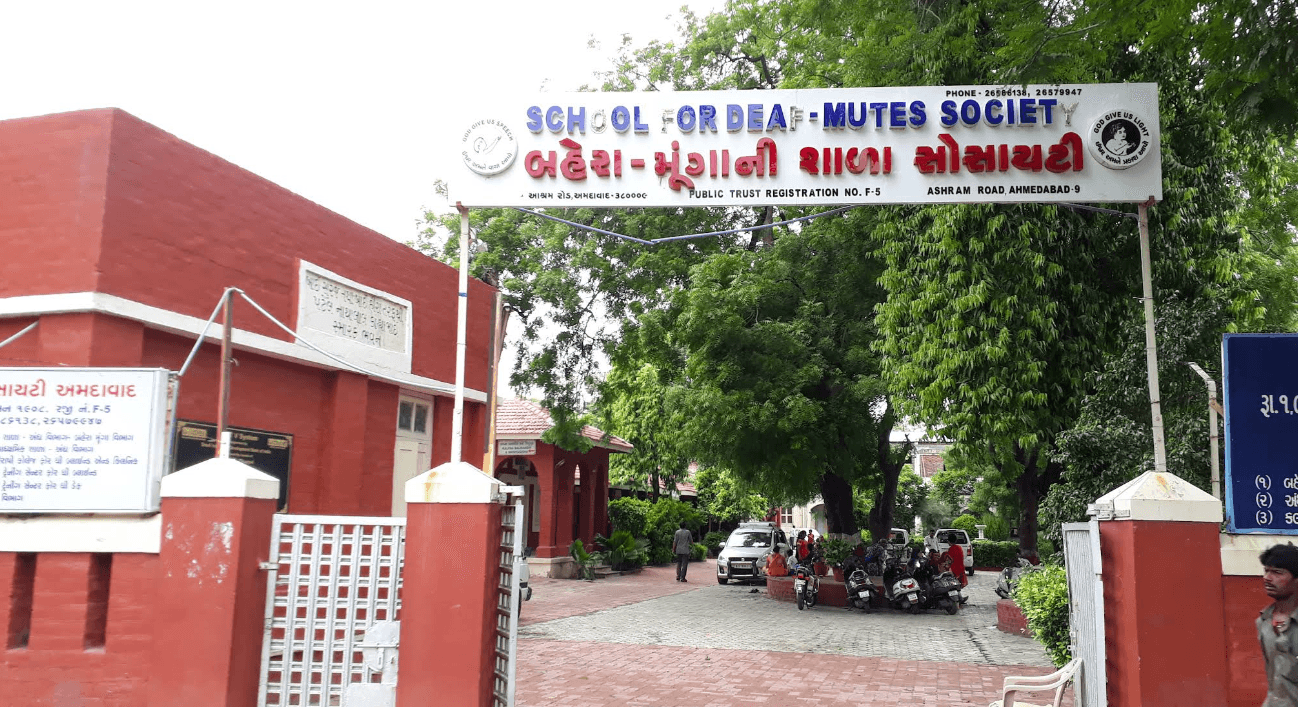
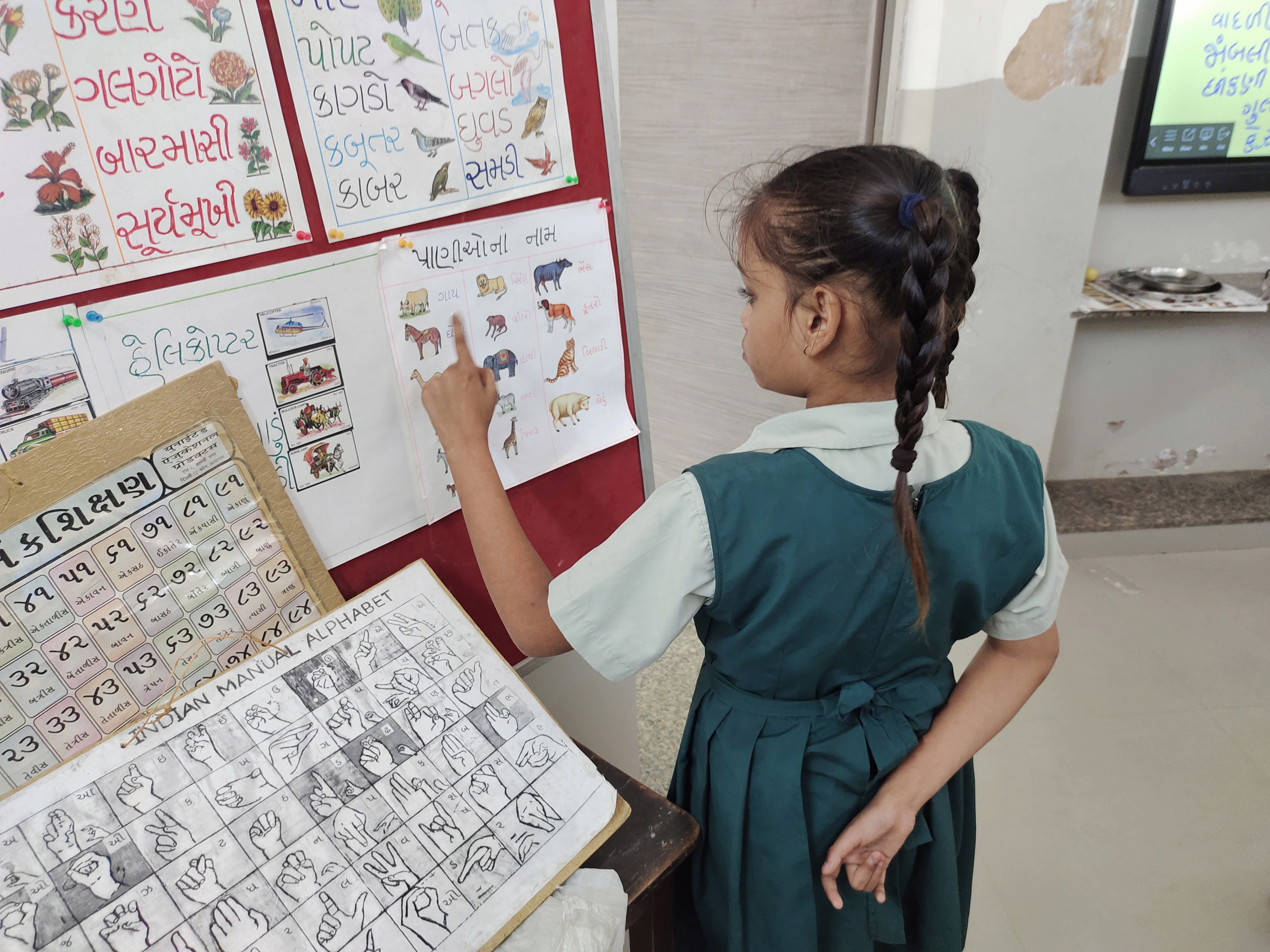
You can only learn so much from numbers, right? So we decided to go where the real story lives inside classrooms. We spent time at the School for the Mute and Deaf in Ahmedabad (yep, the one on Ashram Road opposite Times of India). Watching the students sign, seeing how teachers managed lessons, and just sitting in that space taught us more than any article ever could. The energy in the school was beautiful, but it also revealed the gap the moment these kids step out of that gate, the world stops understanding them.
Then came the conversations. We spoke with Anant Joshi, the Chairman of the Goa Association of the Deaf, along with teachers and students. They didn’t sugarcoat it they spoke about frustration, about not being heard, about how their language is seen as “special” when it should just be normal. But there was pride too pride in their culture, their signs, and their resilience.
We didn’t stop there. We went through reports, case studies, and surveys to get a wider lens. And you know what we found? The same story playing out again and again across schools, families, even communities. It’s not just a communication issue; it’s a system problem. One that keeps repeating itself because we’ve never paused to fix it properly.
You can only learn so much from numbers, right? So we decided to go where the real story lives inside classrooms. We spent time at the School for the Mute and Deaf in Ahmedabad (yep, the one on Ashram Road opposite Times of India). Watching the students sign, seeing how teachers managed lessons, and just sitting in that space taught us more than any article ever could. The energy in the school was beautiful, but it also revealed the gap the moment these kids step out of that gate, the world stops understanding them.
Then came the conversations. We spoke with Anant Joshi, the Chairman of the Goa Association of the Deaf, along with teachers and students. They didn’t sugarcoat it they spoke about frustration, about not being heard, about how their language is seen as “special” when it should just be normal. But there was pride too pride in their culture, their signs, and their resilience.
We didn’t stop there. We went through reports, case studies, and surveys to get a wider lens. And you know what we found? The same story playing out again and again across schools, families, even communities. It’s not just a communication issue; it’s a system problem. One that keeps repeating itself because we’ve never paused to fix it properly.
Insights
Here’s what we learned pretty quickly inclusion doesn’t just happen. It needs structure. You can’t expect connection if no one’s ever taught how to communicate in the first place.
Everywhere we looked, one thing kept showing up: no proper ISL training. Not for teachers. Not for parents. Not for the hearing students sitting right beside their deaf classmates. Parents, especially, are left guessing how to talk to their own kids not out of neglect, but because no one ever handed them the tools.
From our interviews, it was clear that ISL is being taught, yes but only in fragments. It starts and ends inside classrooms, never making it into the real world where students actually need it. And that’s the problem.
What’s missing isn’t intelligence or effort it’s awareness, empathy, and a clear intention. ISL shouldn’t be treated like an optional subject or a “special” skill. It’s a bridge. A way to connect people who’ve been living on opposite sides of silence for far too long.
Insights
Here’s what we learned pretty quickly inclusion doesn’t just happen. It needs structure. You can’t expect connection if no one’s ever taught how to communicate in the first place.
Everywhere we looked, one thing kept showing up: no proper ISL training. Not for teachers. Not for parents. Not for the hearing students sitting right beside their deaf classmates. Parents, especially, are left guessing how to talk to their own kids not out of neglect, but because no one ever handed them the tools. From our interviews, it was clear that ISL is being taught, yes but only in fragments. It starts and ends inside classrooms, never making it into the real world where students actually need it. And that’s the problem.
What’s missing isn’t intelligence or effort it’s awareness, empathy, and a clear intention. ISL shouldn’t be treated like an optional subject or a “special” skill. It’s a bridge. A way to connect people who’ve been living on opposite sides of silence for far too long.
Here’s what we learned pretty quickly inclusion doesn’t just happen. It needs structure. You can’t expect connection if no one’s ever taught how to communicate in the first place.
Everywhere we looked, one thing kept showing up: no proper ISL training. Not for teachers. Not for parents. Not for the hearing students sitting right beside their deaf classmates. Parents, especially, are left guessing how to talk to their own kids not out of neglect, but because no one ever handed them the tools. From our interviews, it was clear that ISL is being taught, yes but only in fragments. It starts and ends inside classrooms, never making it into the real world where students actually need it. And that’s the problem.
What’s missing isn’t intelligence or effort it’s awareness, empathy, and a clear intention. ISL shouldn’t be treated like an optional subject or a “special” skill. It’s a bridge. A way to connect people who’ve been living on opposite sides of silence for far too long.
User Insight Mapping
User Insight Mapping
Empathy Mapping
Empathy Mapping
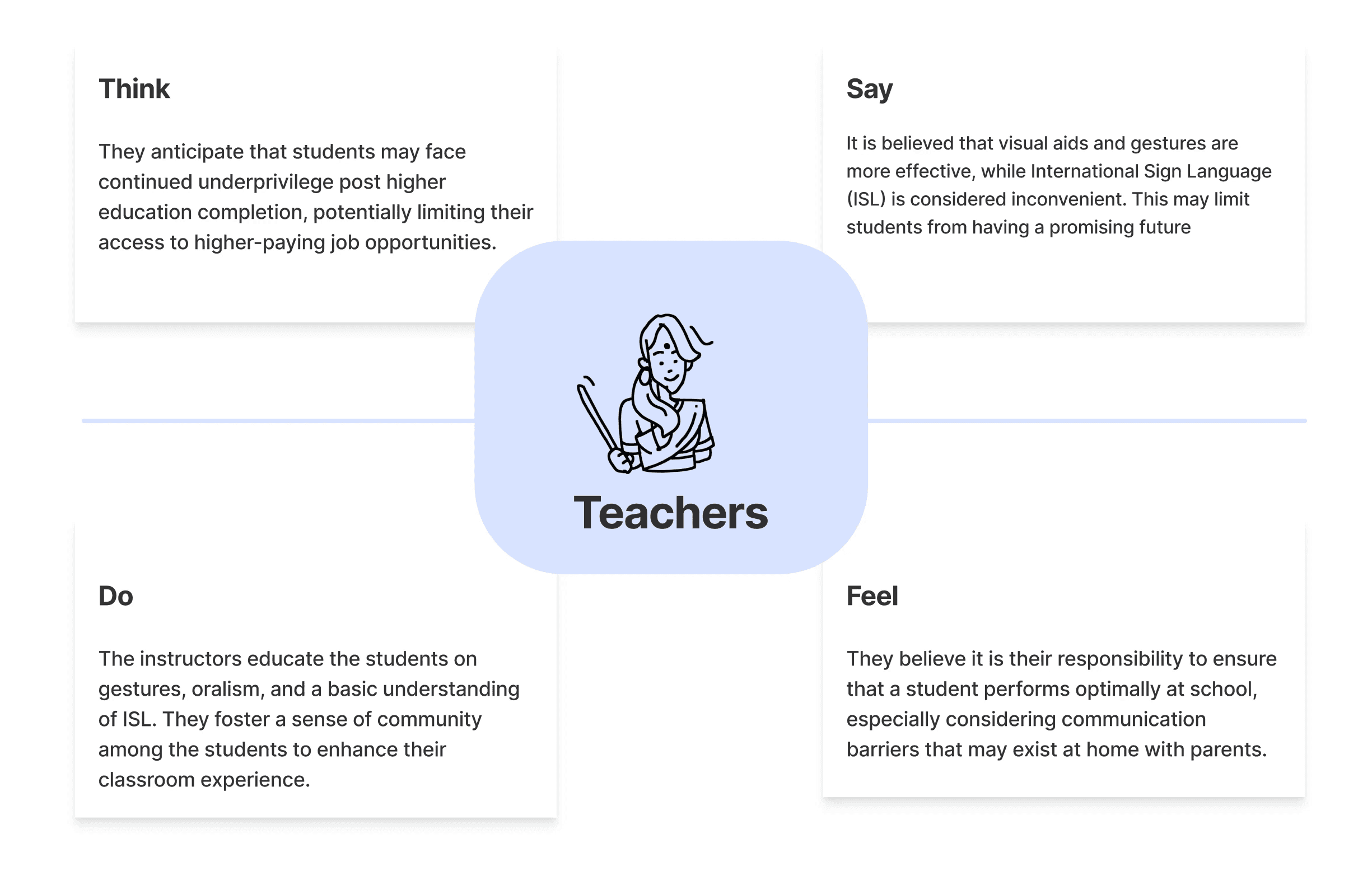
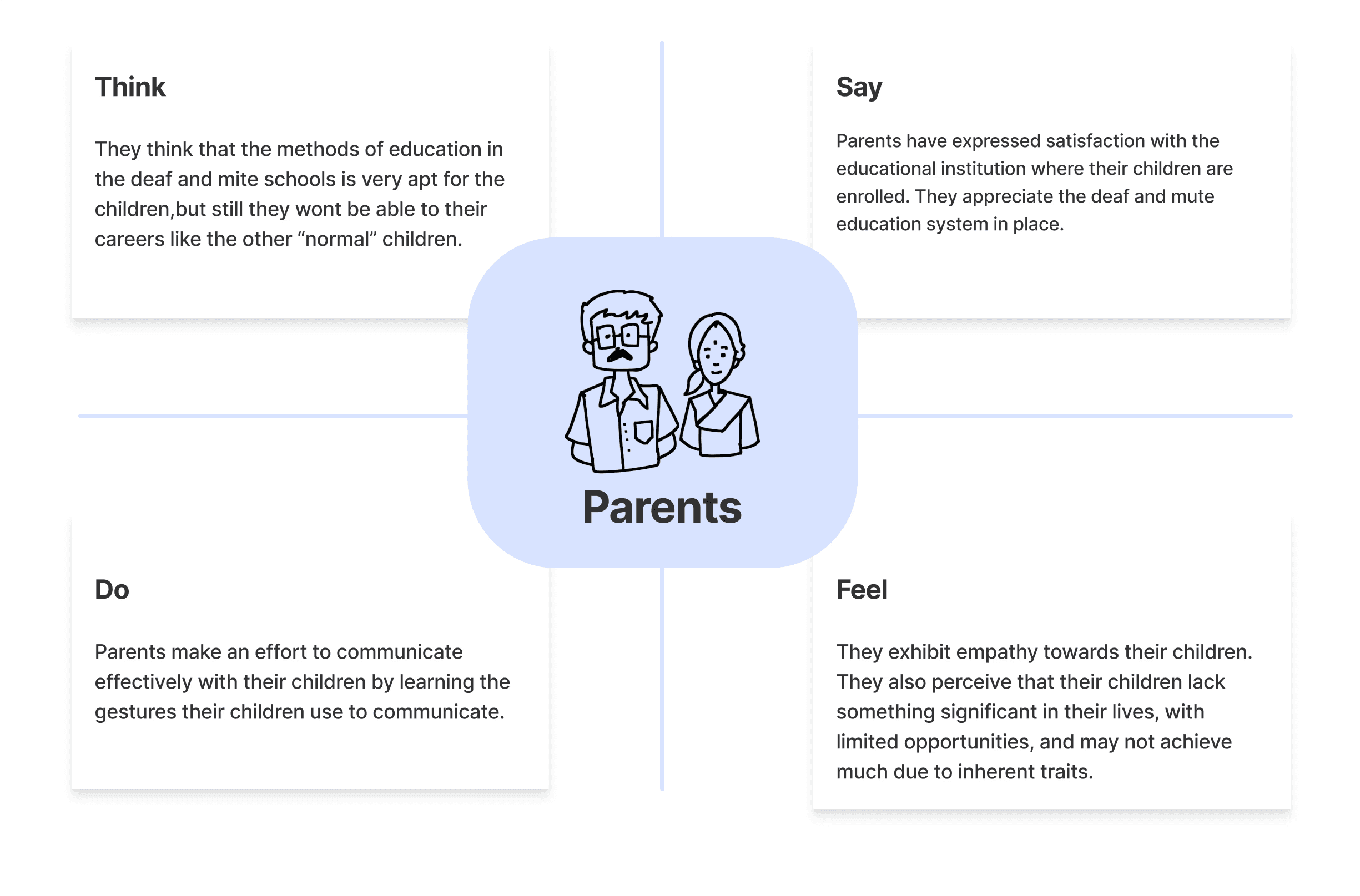
Persona’s Mapping
Persona’s Mapping
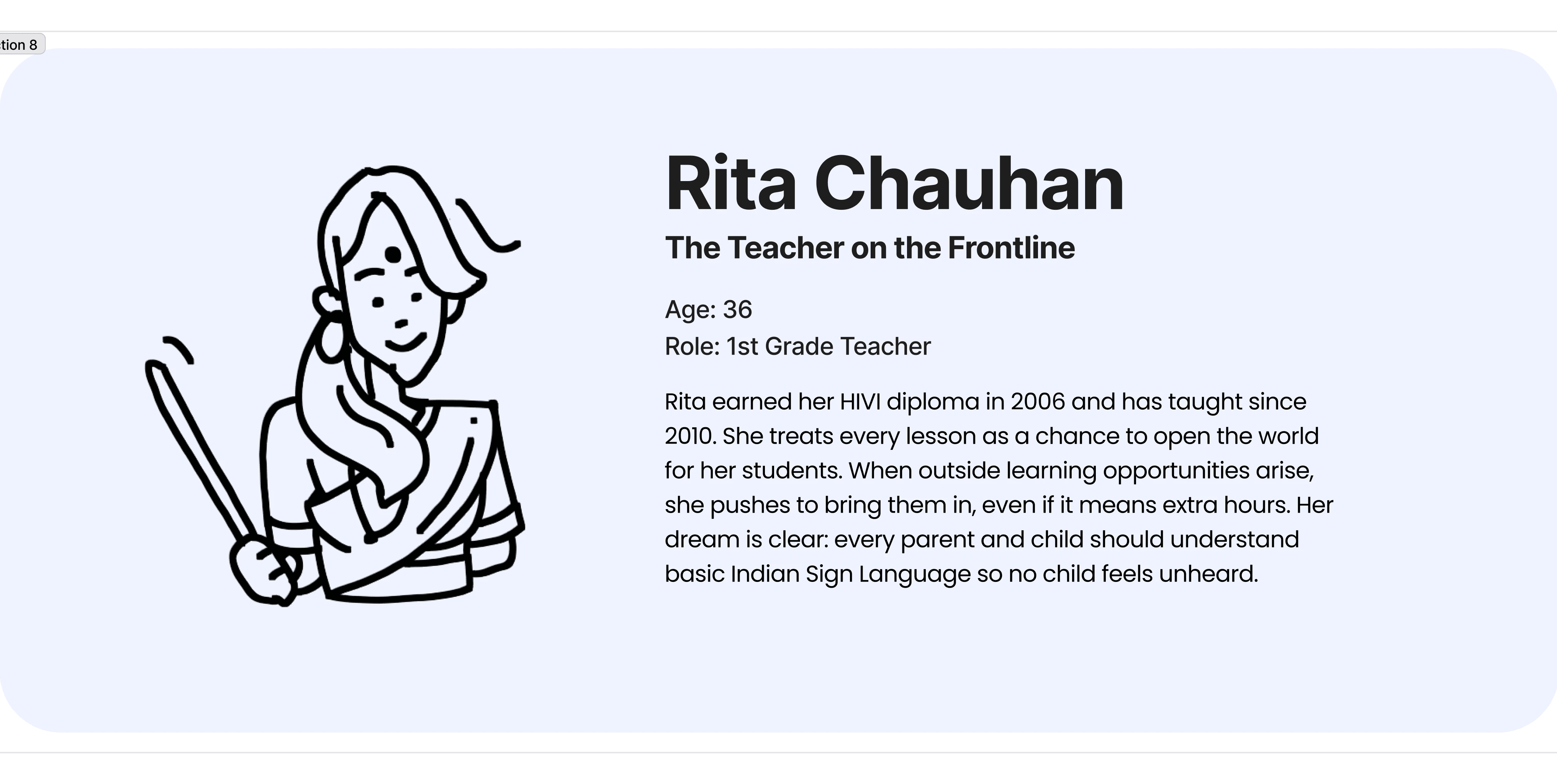
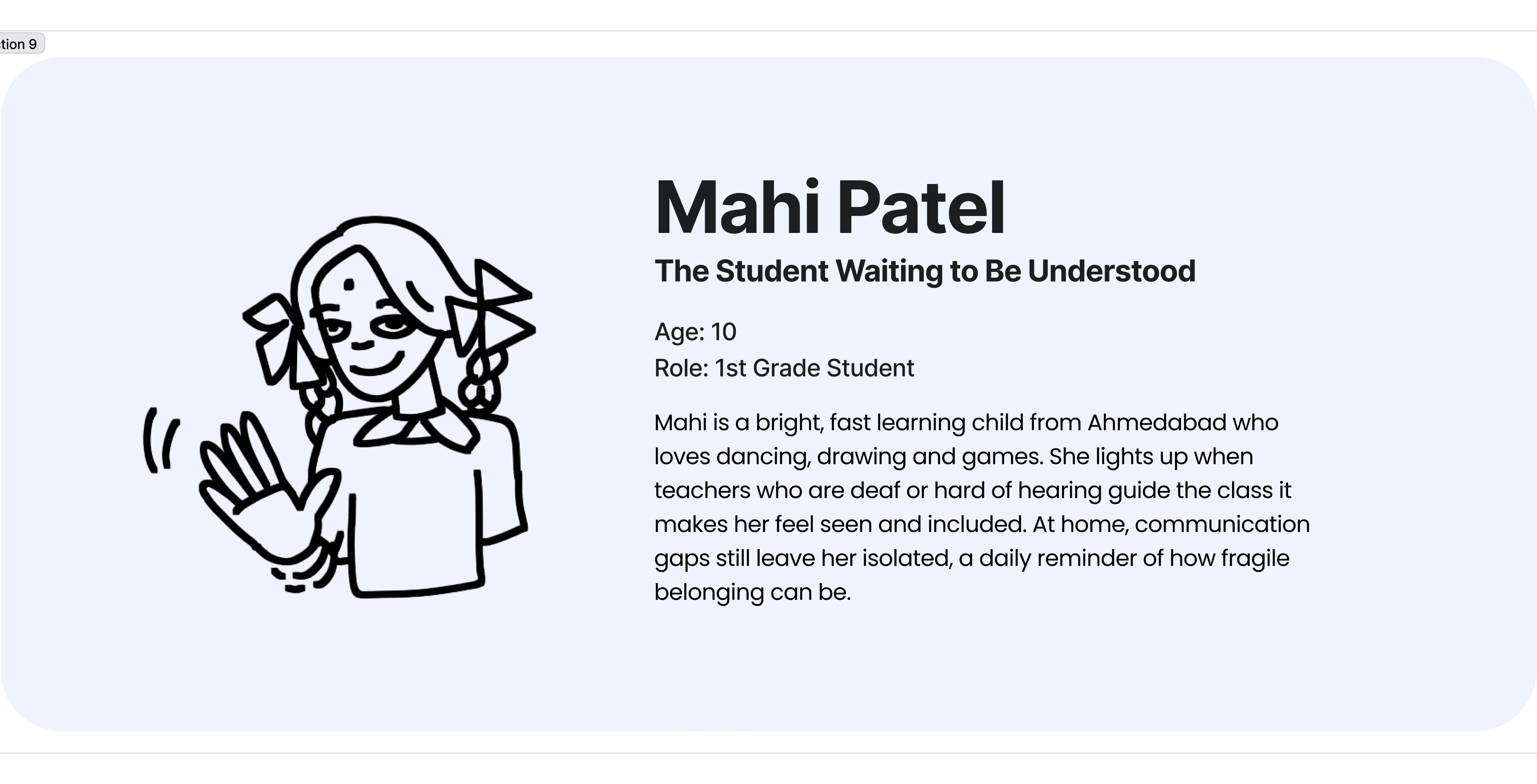
Approach
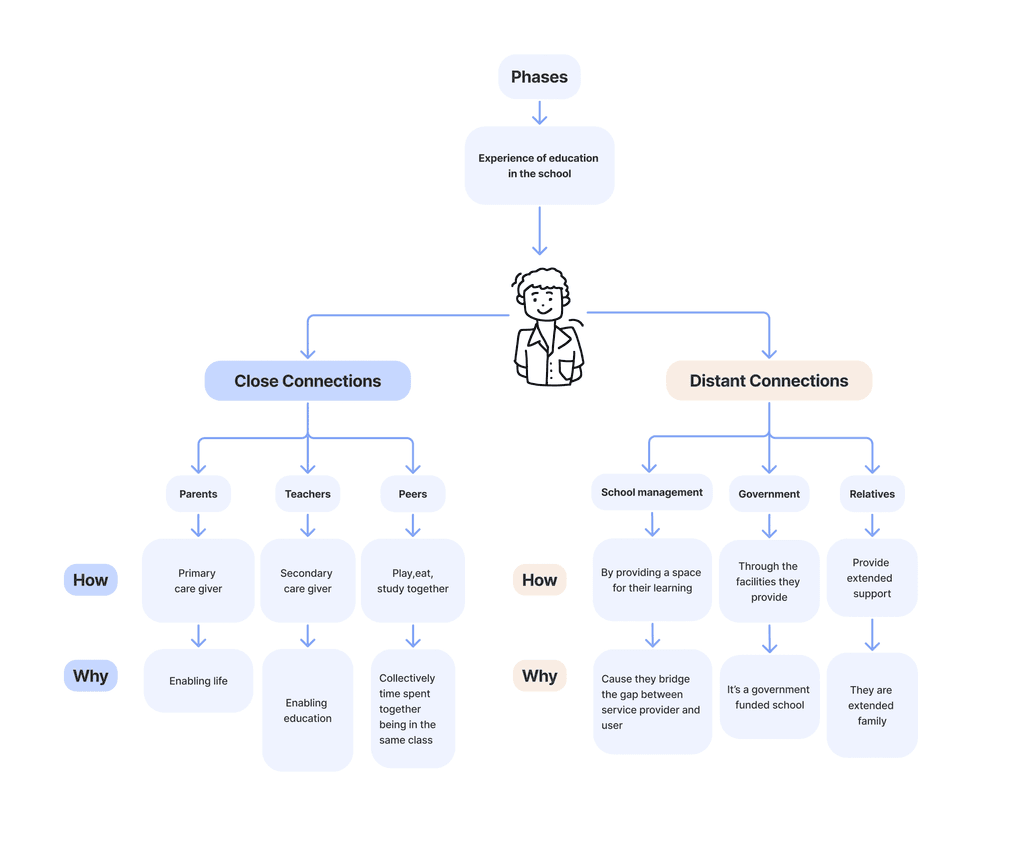
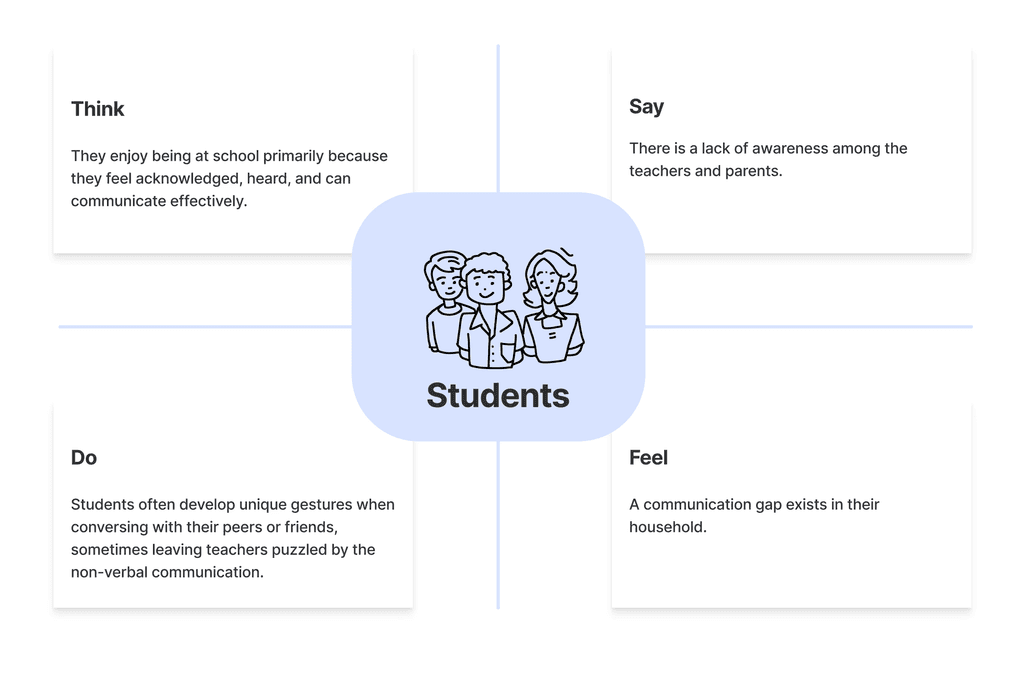
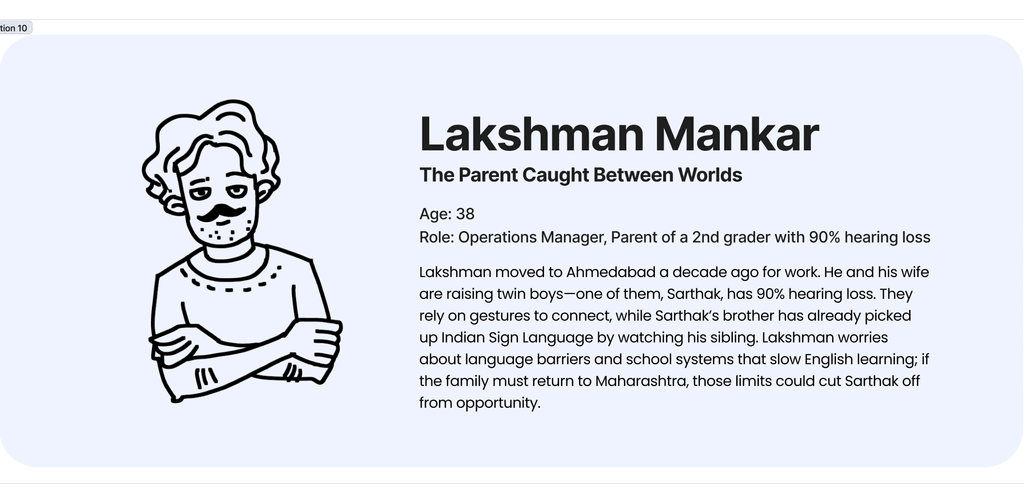
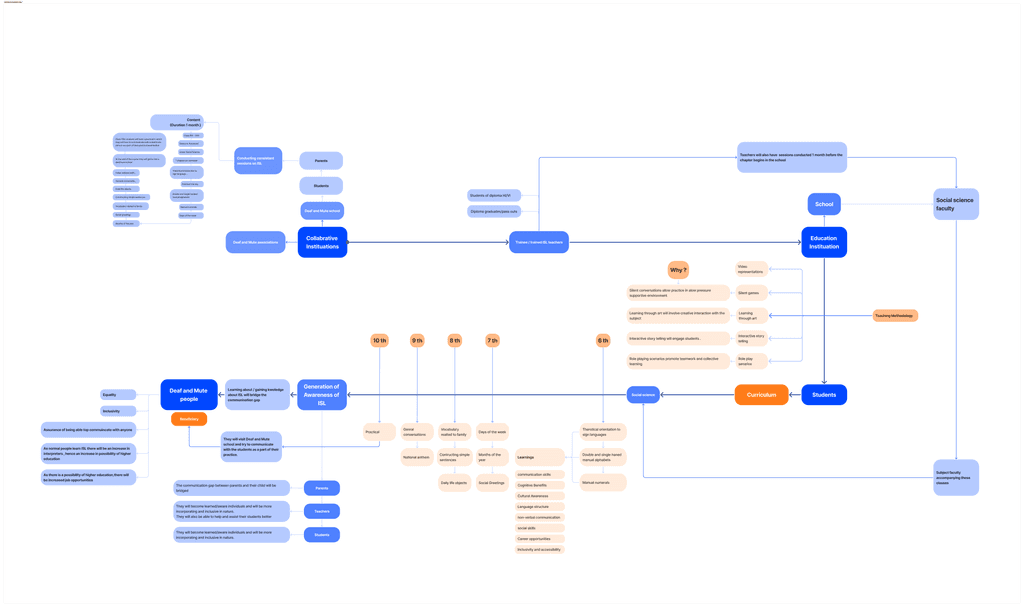
We knew this wasn’t something a single poster or app could fix. The problem sits deep in classrooms, in homes, in how society sees disability. So we zoomed out and mapped everything around a deaf student’s life: the teachers, the parents, the friends who want to help but don’t know how. We used empathy maps and personas not as design tools, but as a way to step into their shoes. That’s when it hit us teachers aren’t trained, parents aren’t guided, and students are left to figure it out alone. Our approach was simple: don’t design for inclusion, design a system that is inclusive from the start.
Ecosystem Mapping
Ecosystem Mapping
Approach
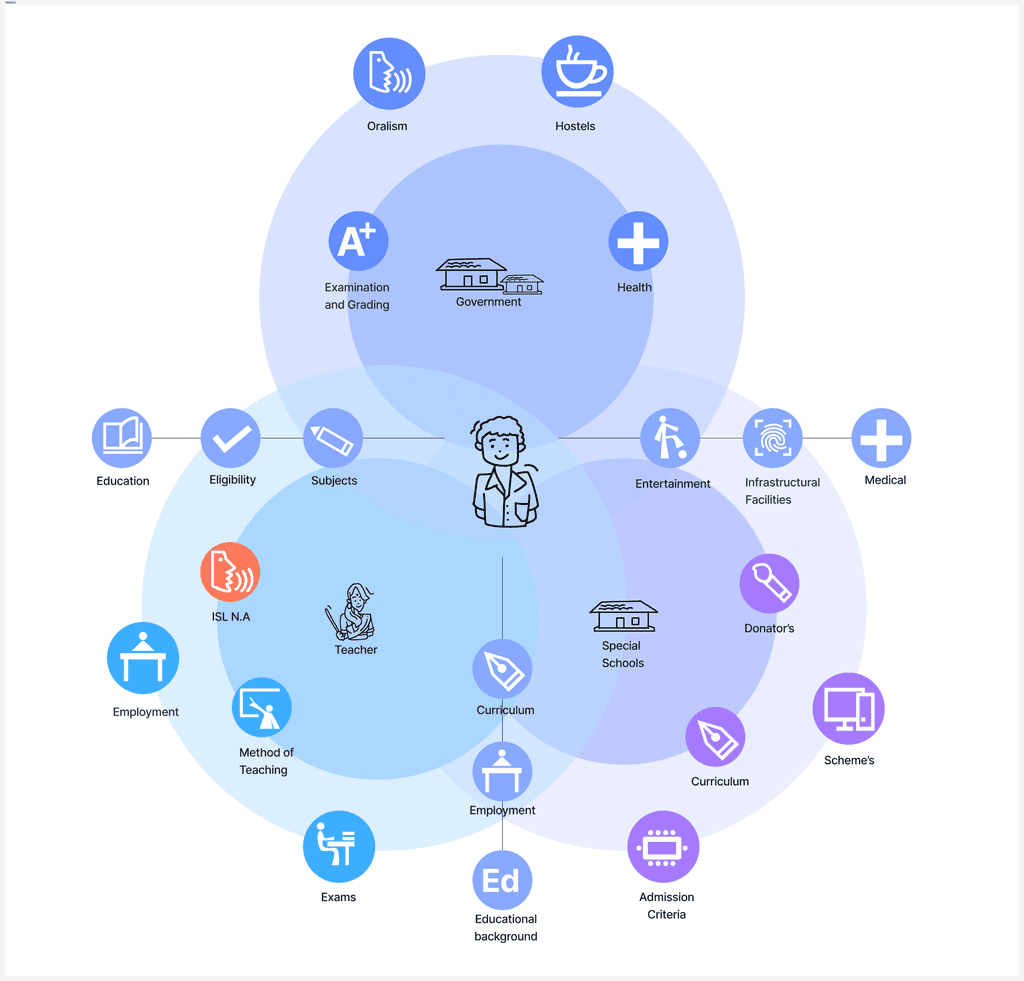
We knew this wasn’t something a single poster or app could fix. The problem sits deep in classrooms, in homes, in how society sees disability. So we zoomed out and mapped everything around a deaf student’s life: the teachers, the parents, the friends who want to help but don’t know how. We used empathy maps and personas not as design tools, but as a way to step into their shoes. That’s when it hit us teachers aren’t trained, parents aren’t guided, and students are left to figure it out alone. Our approach was simple: don’t design for inclusion, design a system that is inclusive from the start.
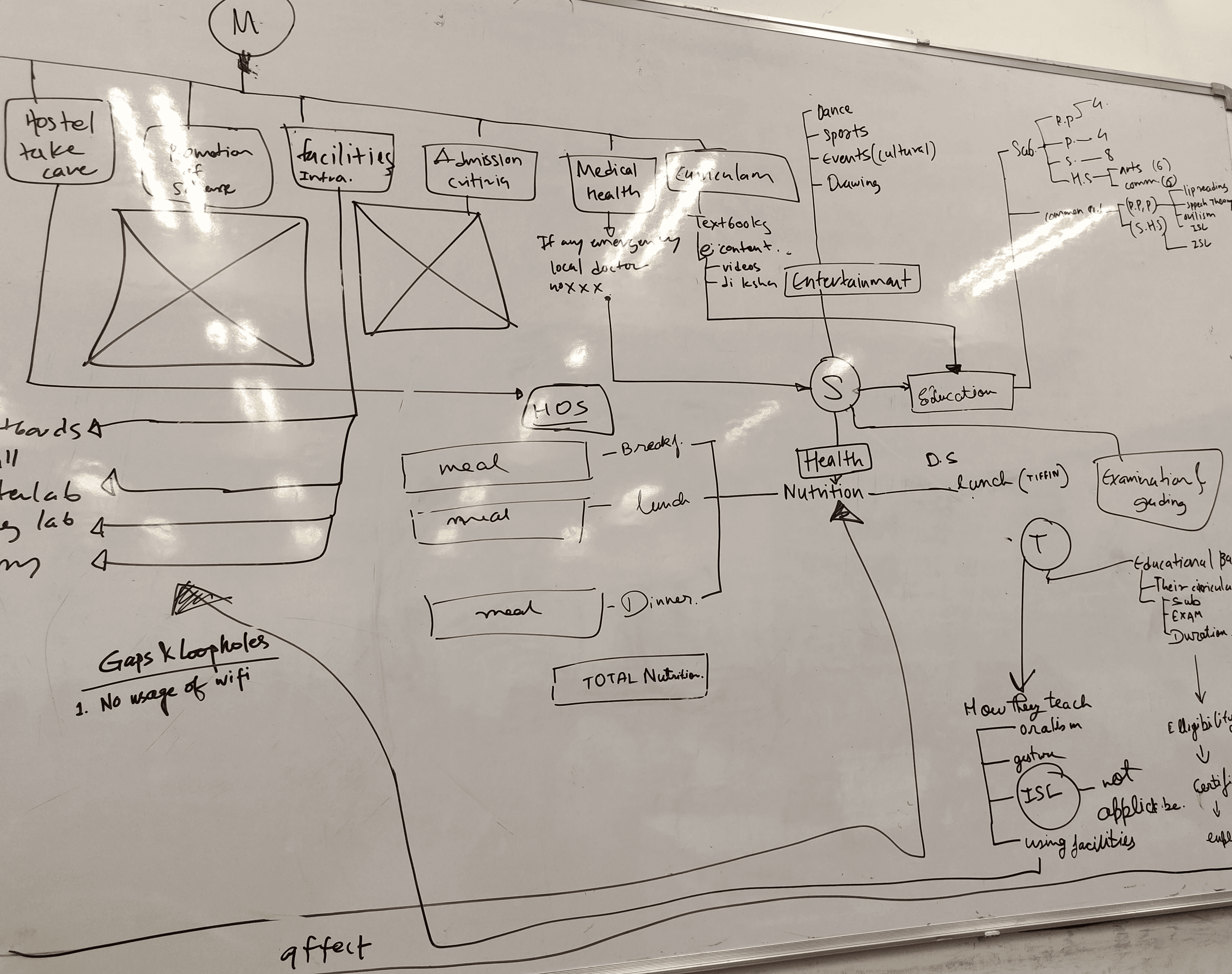
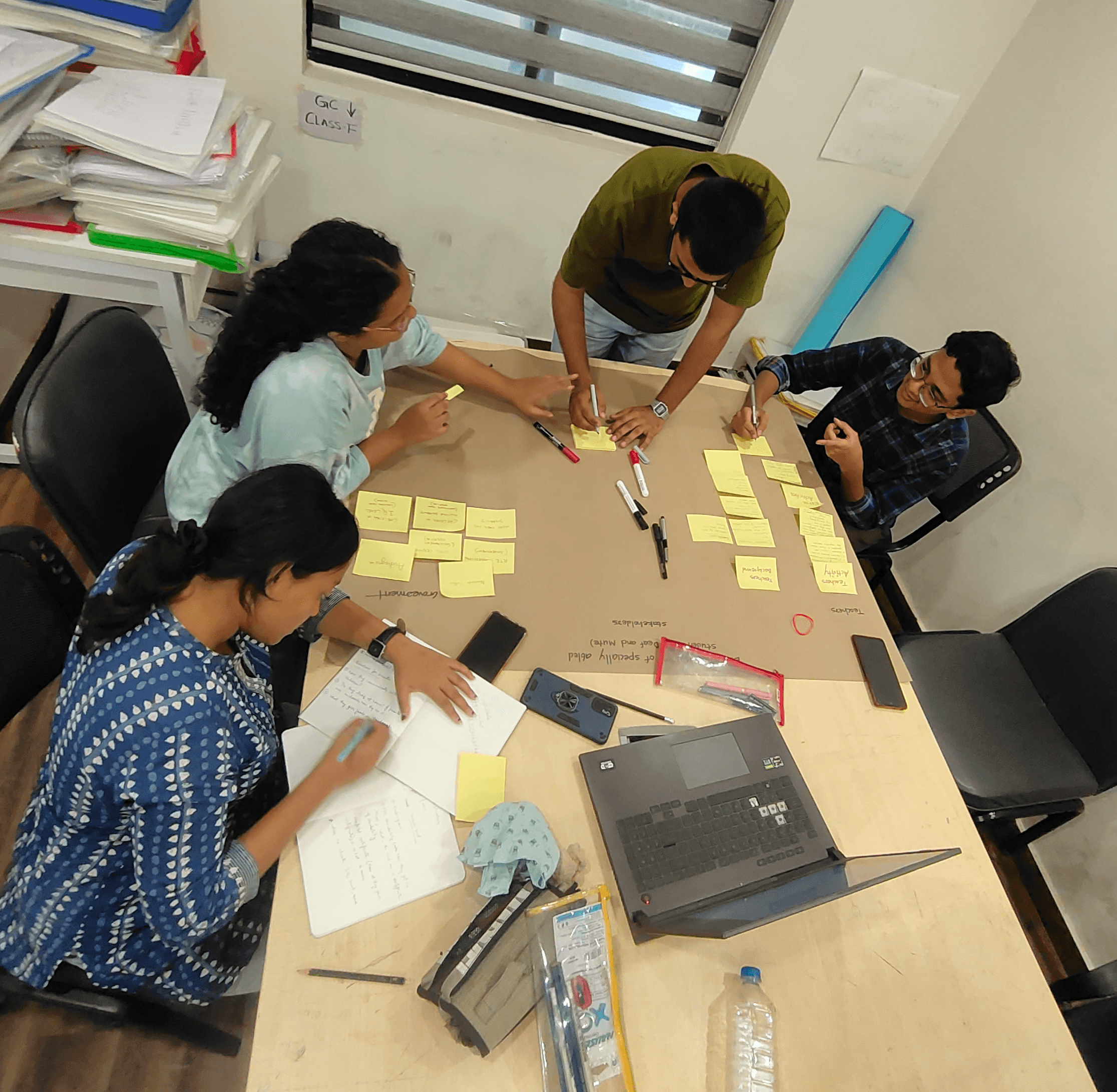
We knew this wasn’t something a single poster or app could fix. The problem sits deep in classrooms, in homes, in how society sees disability. So we zoomed out and mapped everything around a deaf student’s life: the teachers, the parents, the friends who want to help but don’t know how. We used empathy maps and personas not as design tools, but as a way to step into their shoes. That’s when it hit us teachers aren’t trained, parents aren’t guided, and students are left to figure it out alone. Our approach was simple: don’t design for inclusion, design a system that is inclusive from the start.
The Gap
Here’s what stood out after all the research and mapping once deaf students leave school, the system leaves them too. There’s no real space or structure that helps them communicate with the world outside. They graduate, step out, and suddenly no one speaks their language. The issue isn’t about capability; it’s about awareness. We haven’t built a bridge that connects them to everyone else.
And that’s the real urgency here Indian Sign Language needs to live inside our education system, not outside it. Not as a special subject, not as charity work, but as a language for everyone. Because when we leave ISL out, we’re not just ignoring a language we’re silencing millions of people who are ready to be heard.
Here’s what stood out after all the research and mapping once deaf students leave school, the system leaves them too. There’s no real space or structure that helps them communicate with the world outside. They graduate, step out, and suddenly no one speaks their language. The issue isn’t about capability; it’s about awareness. We haven’t built a bridge that connects them to everyone else.
And that’s the real urgency here Indian Sign Language needs to live inside our education system, not outside it. Not as a special subject, not as charity work, but as a language for everyone. Because when we leave ISL out, we’re not just ignoring a language we’re silencing millions of people who are ready to be heard.
Presenting Sanket,
Sanket
Sanket
Sanket
What is Sanket?
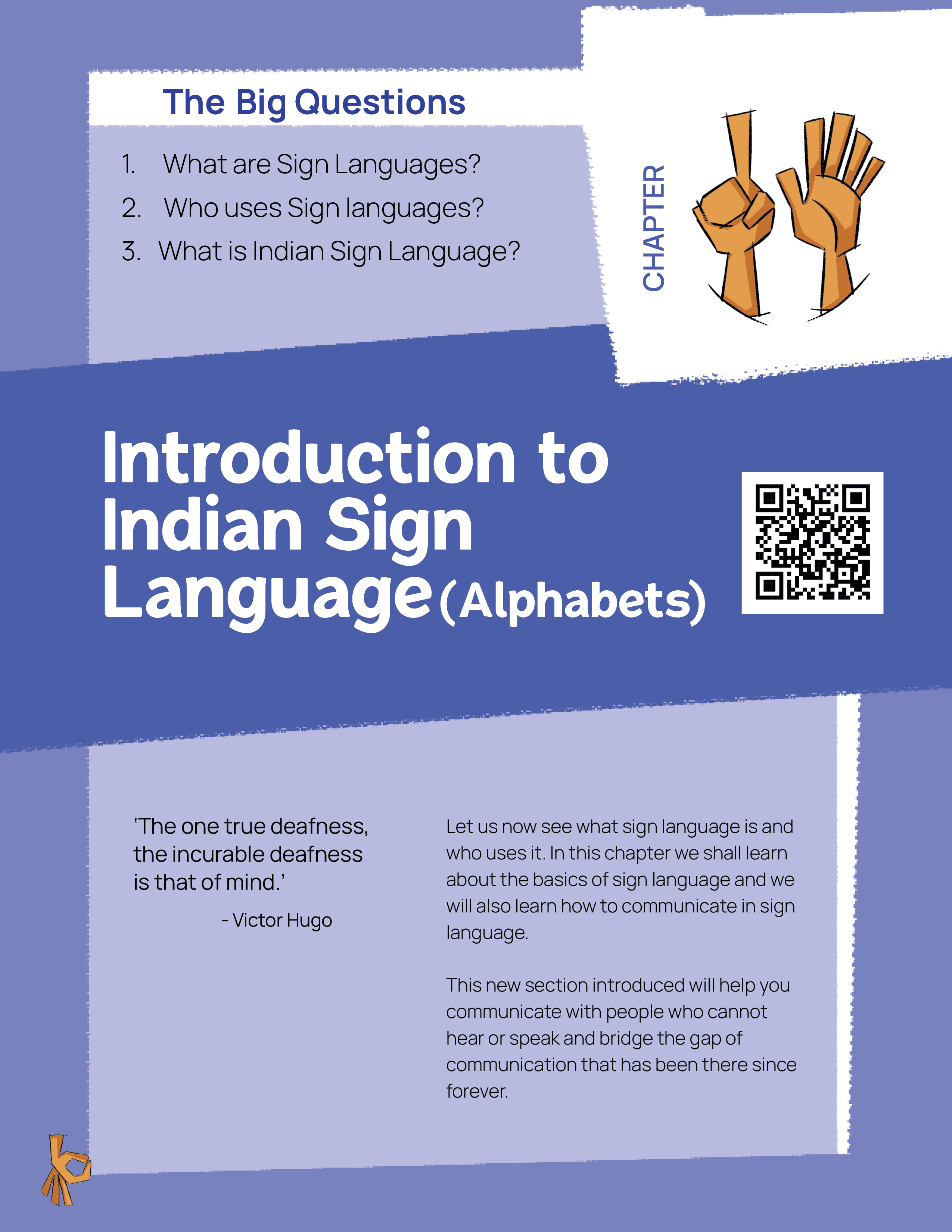
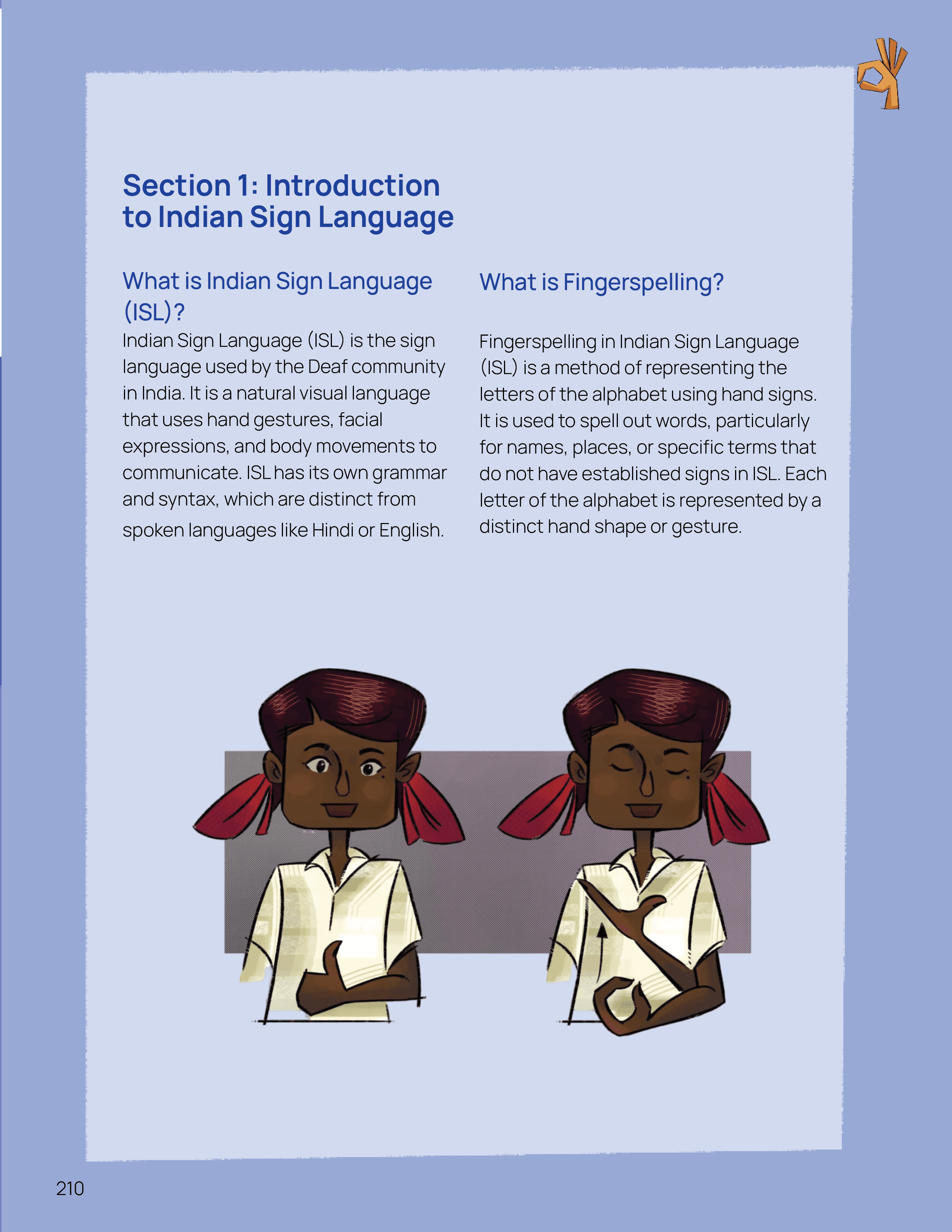
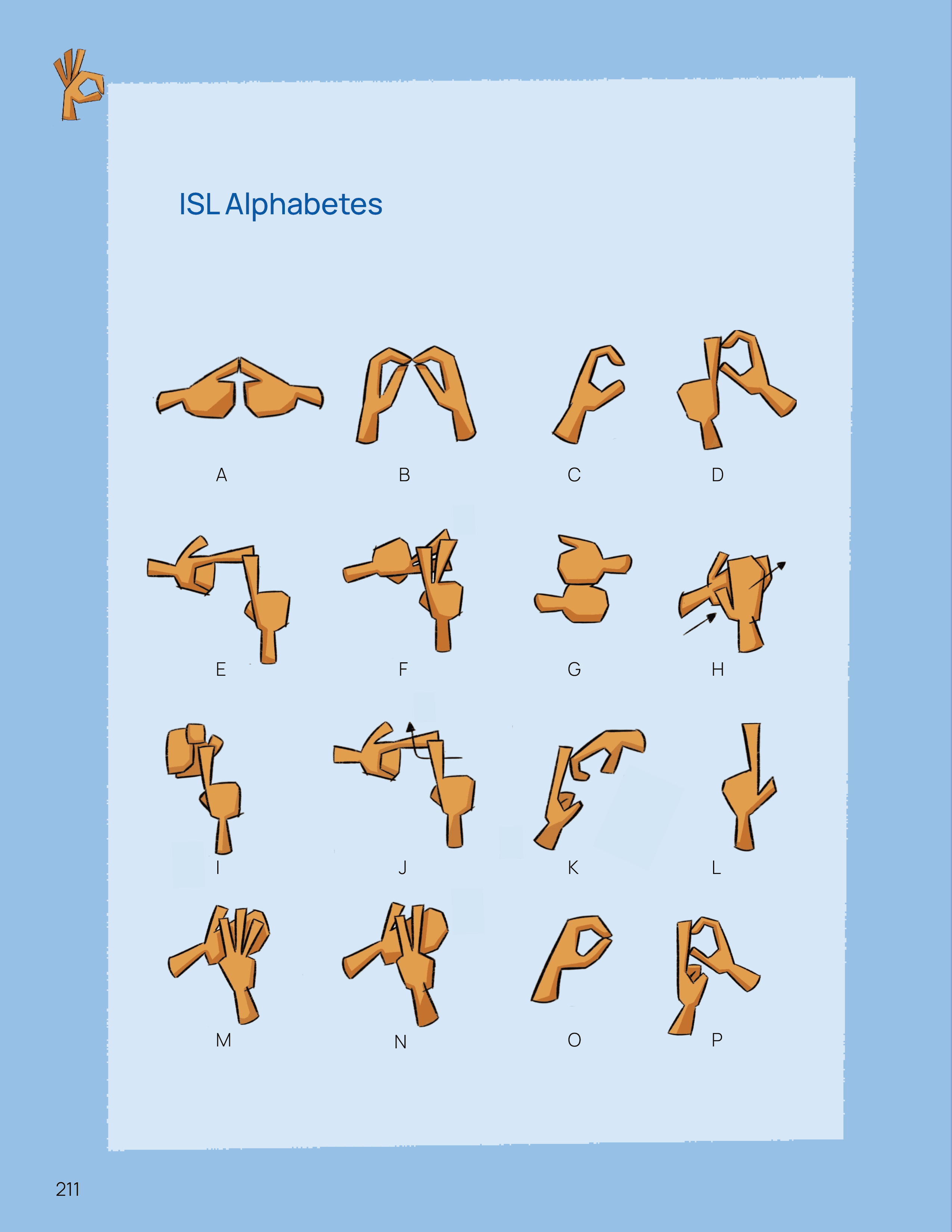
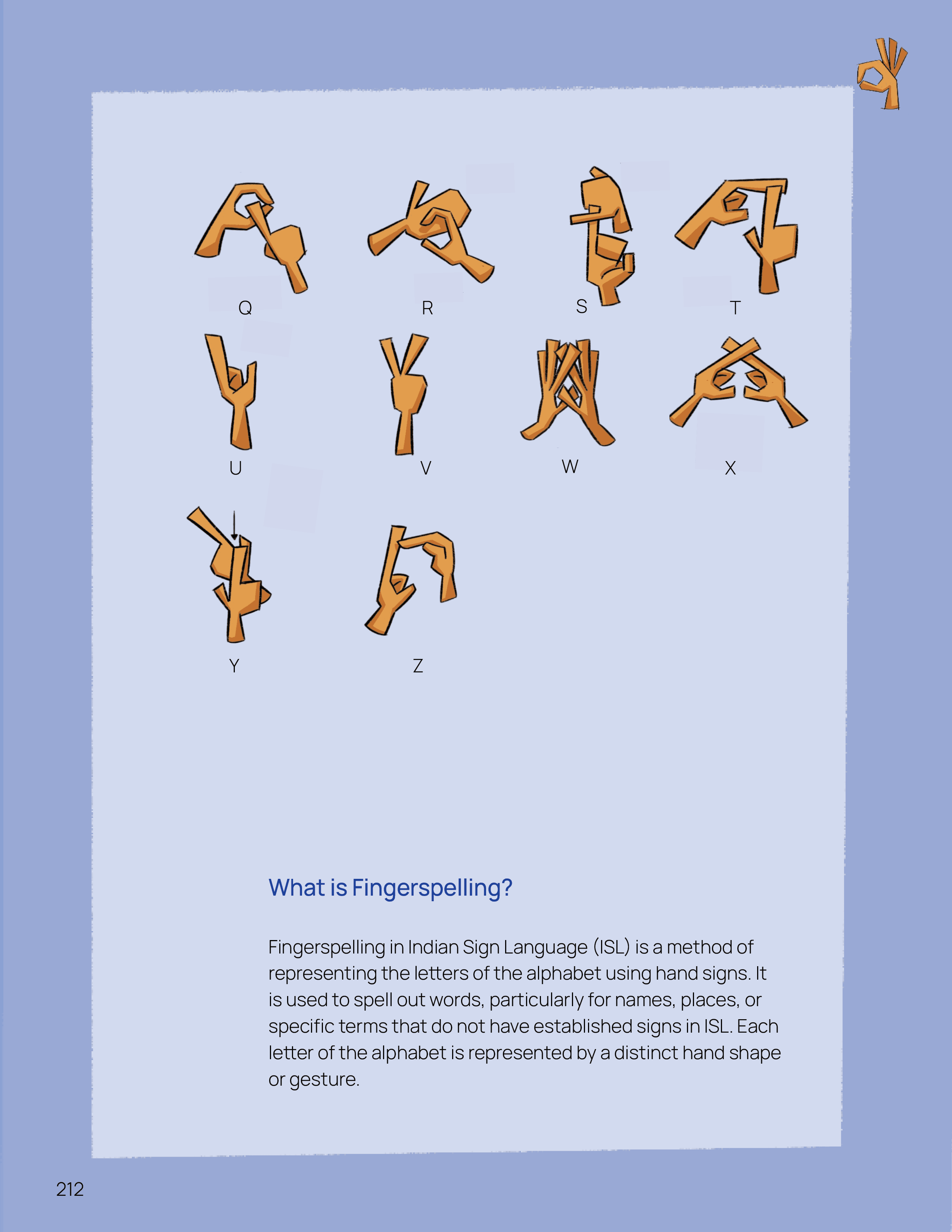
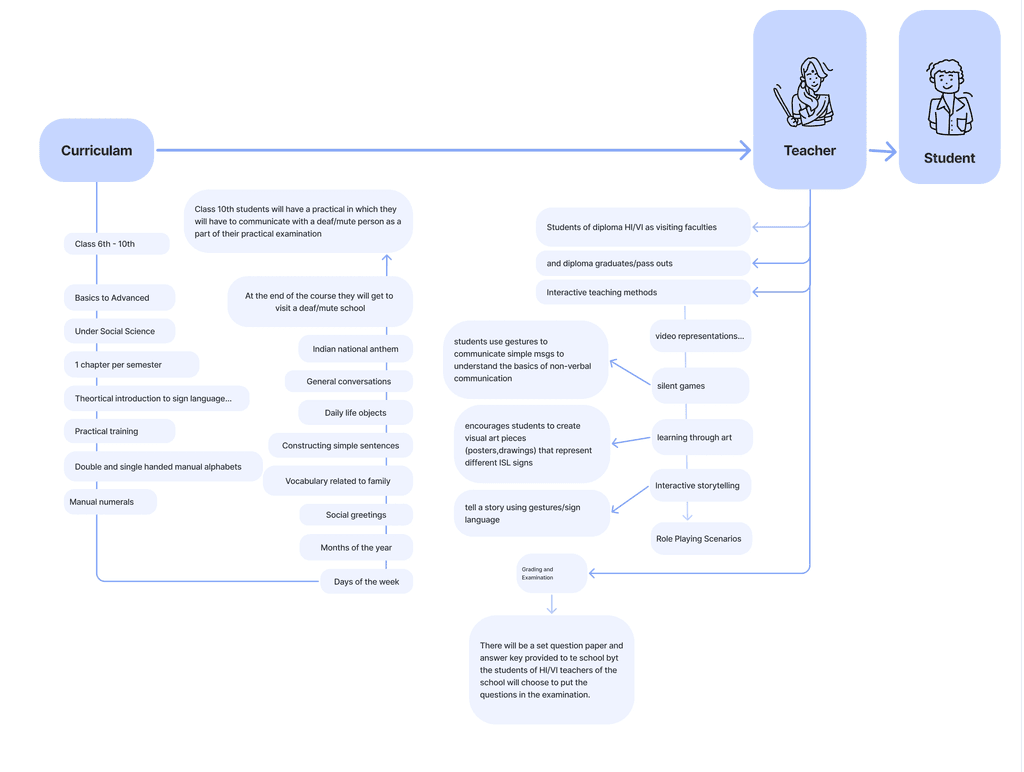
Think of Sanket as a small chapter with a big mission. It’s a proposed addition to NCERT’s Social Science books for classes 6 to 10 but instead of teaching yet another grammar rule, it teaches Indian Sign Language (ISL). Yep, the same way we learn Hindi or Marathi, students would learn how to communicate with their hands, expressions, and empathy.
The idea is simple: when kids learn ISL early, they grow up seeing it as normal, not “special.” Deaf students finally get a common language with their hearing classmates, and the classroom turns into an equal playing field instead of two separate worlds.
And why NCERT? Because that’s where the ripple starts. One board, one curriculum, millions of students across India. If every CBSE school learns ISL, imagine the kind of awareness and inclusivity that creates. We’re not just teaching signs we’re teaching understanding, curiosity, and connection.
At its heart, Sanket believes in one thing: inclusion shouldn’t be a chapter we read about. It should be one we live, together.
Think of Sanket as a small chapter with a big mission. It’s a proposed addition to NCERT’s Social Science books for classes 6 to 10 but instead of teaching yet another grammar rule, it teaches Indian Sign Language (ISL). Yep, the same way we learn Hindi or Marathi, students would learn how to communicate with their hands, expressions, and empathy.
The idea is simple: when kids learn ISL early, they grow up seeing it as normal, not “special.” Deaf students finally get a common language with their hearing classmates, and the classroom turns into an equal playing field instead of two separate worlds. And why NCERT? Because that’s where the ripple starts. One board, one curriculum, millions of students across India. If every CBSE school learns ISL, imagine the kind of awareness and inclusivity that creates. We’re not just teaching signs we’re teaching understanding, curiosity, and connection.
At its heart, Sanket believes in one thing: inclusion shouldn’t be a chapter we read about. It should be one we live, together.
Presenting Sanket
The Gap
Here’s what stood out after all the research and mapping once deaf students leave school, the system leaves them too. There’s no real space or structure that helps them communicate with the world outside. They graduate, step out, and suddenly no one speaks their language. The issue isn’t about capability; it’s about awareness. We haven’t built a bridge that connects them to everyone else.
And that’s the real urgency here Indian Sign Language needs to live inside our education system, not outside it. Not as a special subject, not as charity work, but as a language for everyone. Because when we leave ISL out, we’re not just ignoring a language we’re silencing millions of people who are ready to be heard.
Affinity Mapping
Affinity Mapping
What is Sanket?
Think of Sanket as a small chapter with a big mission. It’s a proposed addition to NCERT’s Social Science books for classes 6 to 10 but instead of teaching yet another grammar rule, it teaches Indian Sign Language (ISL). Yep, the same way we learn Hindi or Marathi, students would learn how to communicate with their hands, expressions, and empathy.
The idea is simple: when kids learn ISL early, they grow up seeing it as normal, not “special.” Deaf students finally get a common language with their hearing classmates, and the classroom turns into an equal playing field instead of two separate worlds. And why NCERT? Because that’s where the ripple starts. One board, one curriculum, millions of students across India. If every CBSE school learns ISL, imagine the kind of awareness and inclusivity that creates. We’re not just teaching signs we’re teaching understanding, curiosity, and connection.
At its heart, Sanket believes in one thing: inclusion shouldn’t be a chapter we read about. It should be one we live, together.
Offered Ecosystem Mapping
Offered Ecosystem Mapping
Testing
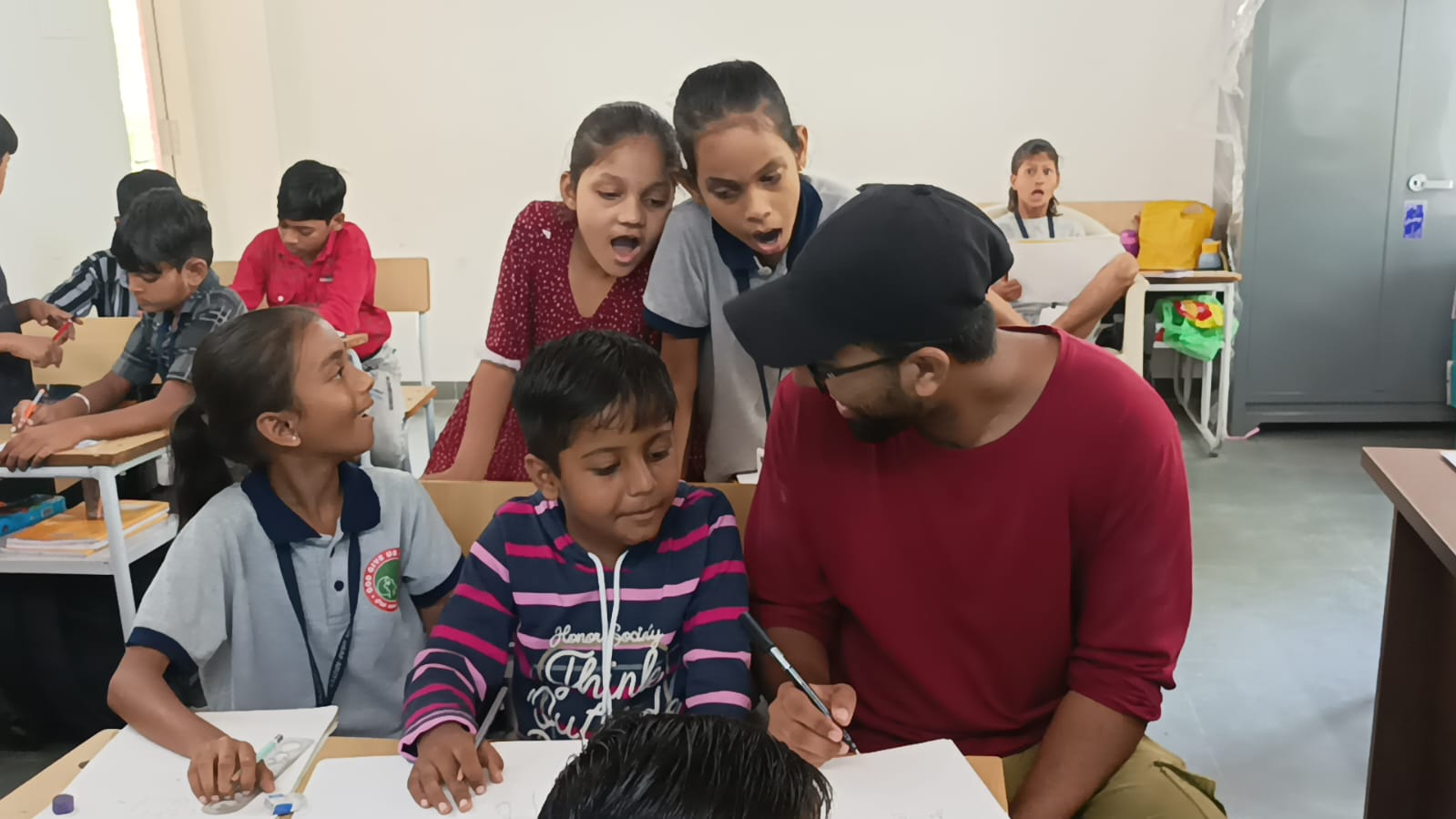
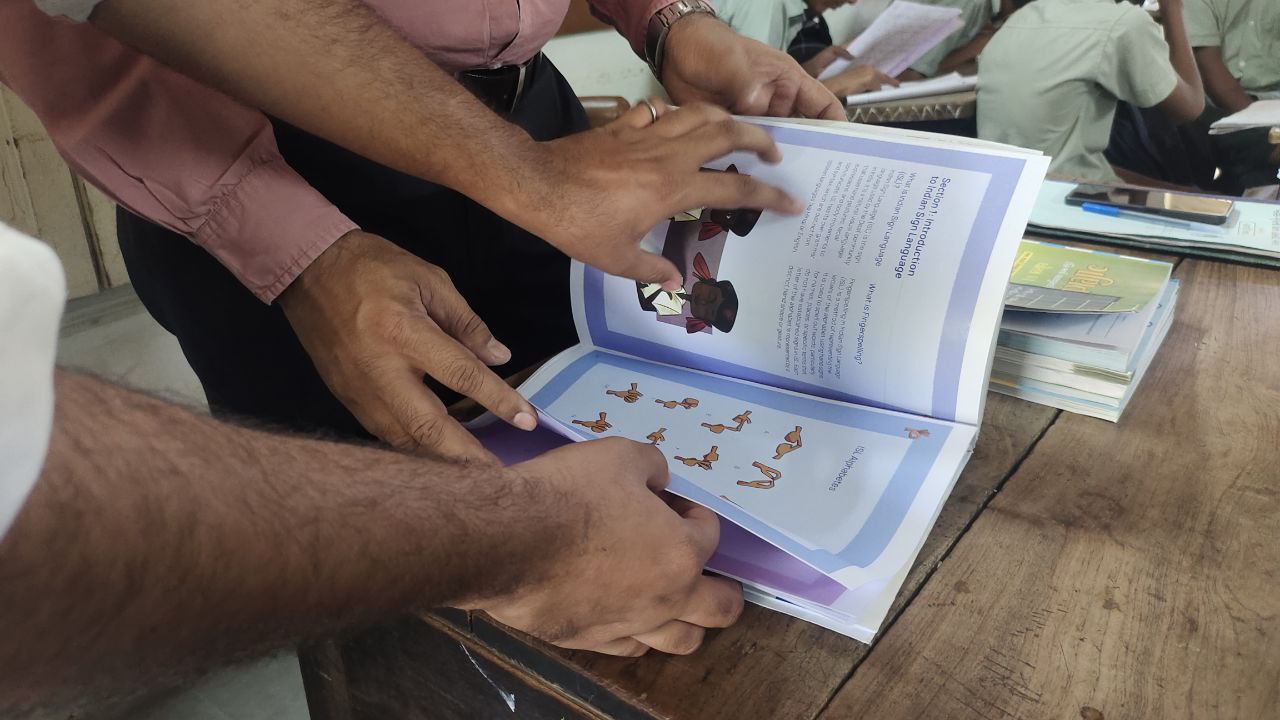
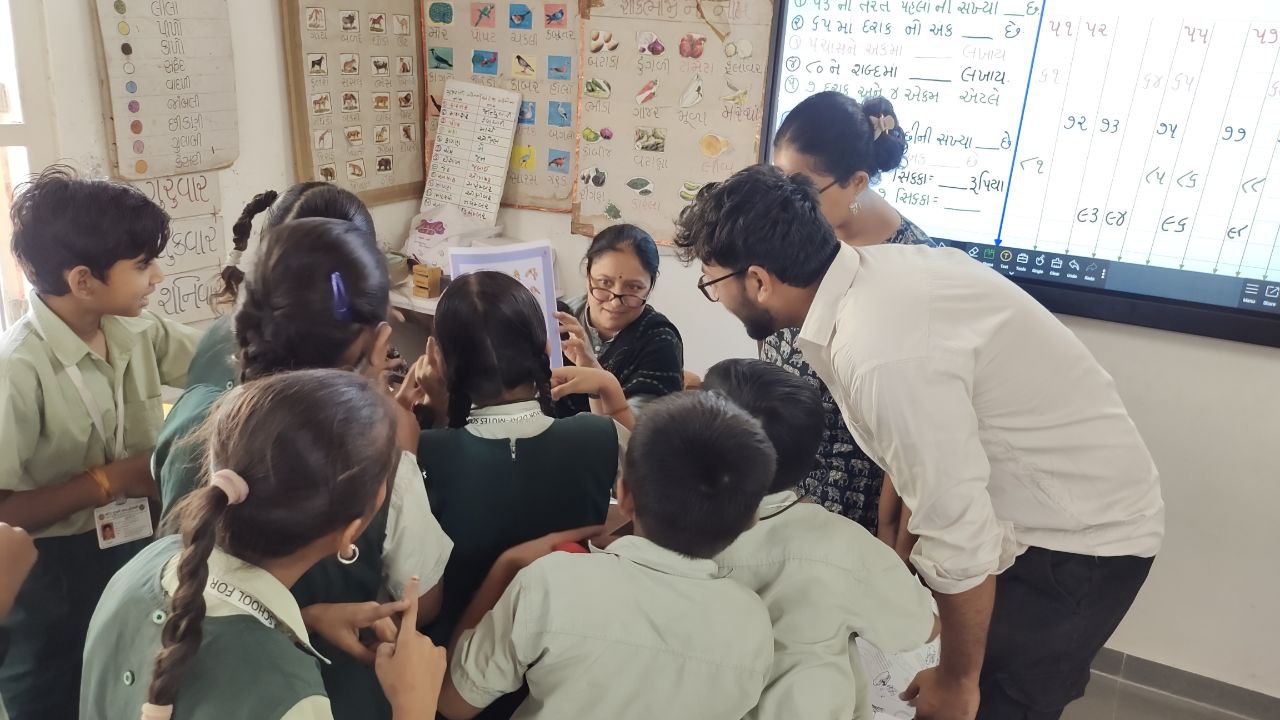
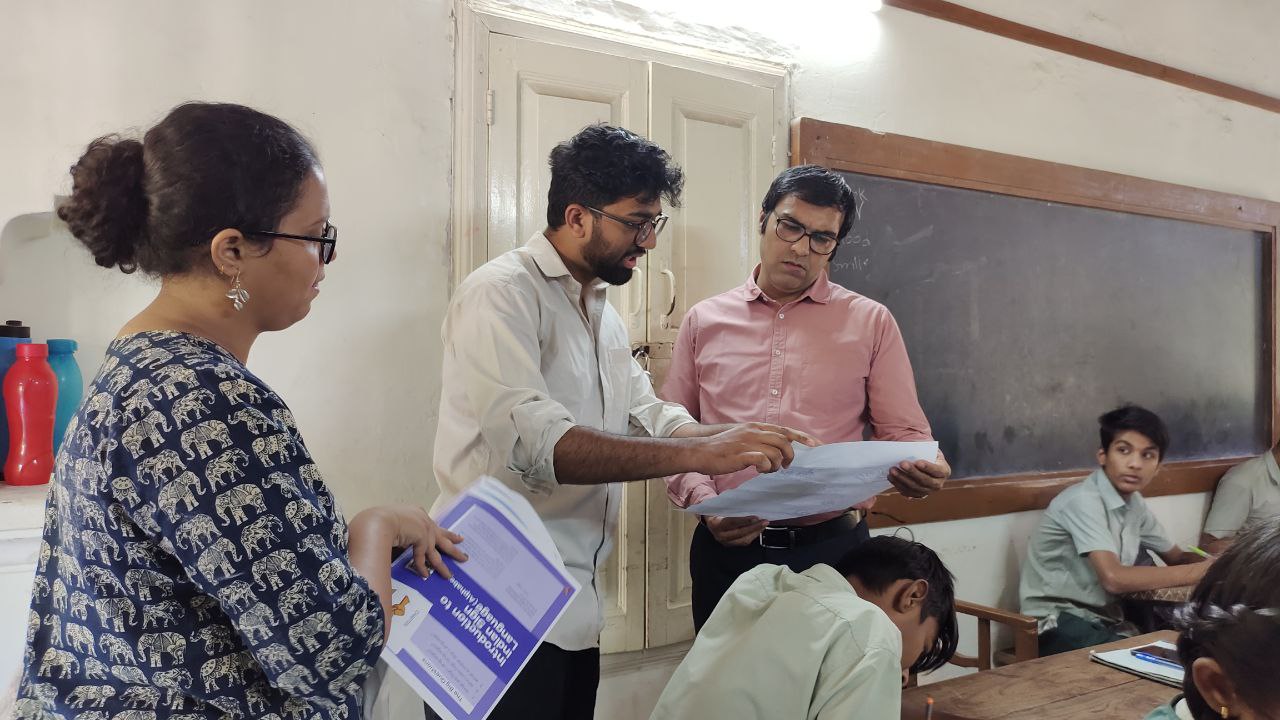
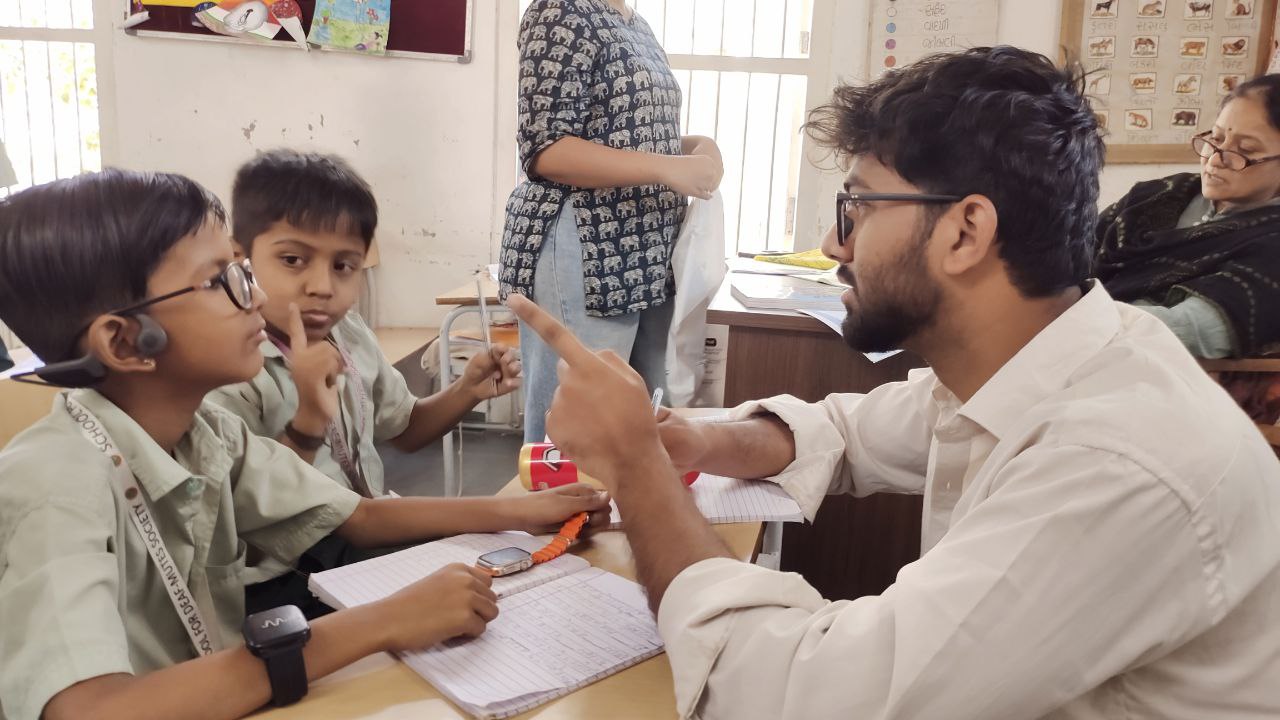
Once Sanket was ready, we took it straight to where it mattered the classroom. We spent days at a school for deaf and mute students, watching lessons, sitting in the back rows, chatting with teachers, and signing (awkwardly at first) with the students. They told us what made sense, what confused them, and what they wished could be better. The teachers didn’t hold back either they pointed out things we’d completely missed, and honestly, that’s exactly what we needed.
We wanted to test it in regular schools too, to see how hearing and deaf students might learn side by side, but getting permissions was another story. Still, that one school taught us plenty. We saw how the chapter made ISL learning easier, how it gave students a sense of pride, and how much more potential there was if it reached every child. Seeing their faces light up when they understood something that’s when it hit us. Sanket wasn’t just an idea anymore. It worked. It meant something. And now, it had to go further.
Testing
Once Sanket was ready, we took it straight to where it mattered the classroom. We spent days at a school for deaf and mute students, watching lessons, sitting in the back rows, chatting with teachers, and signing (awkwardly at first) with the students. They told us what made sense, what confused them, and what they wished could be better. The teachers didn’t hold back either they pointed out things we’d completely missed, and honestly, that’s exactly what we needed.
We wanted to test it in regular schools too, to see how hearing and deaf students might learn side by side, but getting permissions was another story. Still, that one school taught us plenty. We saw how the chapter made ISL learning easier, how it gave students a sense of pride, and how much more potential there was if it reached every child. Seeing their faces light up when they understood something that’s when it hit us. Sanket wasn’t just an idea anymore. It worked. It meant something. And now, it had to go further.
Once Sanket was ready, we took it straight to where it mattered the classroom. We spent days at a school for deaf and mute students, watching lessons, sitting in the back rows, chatting with teachers, and signing (awkwardly at first) with the students. They told us what made sense, what confused them, and what they wished could be better. The teachers didn’t hold back either they pointed out things we’d completely missed, and honestly, that’s exactly what we needed.
We wanted to test it in regular schools too, to see how hearing and deaf students might learn side by side, but getting permissions was another story. Still, that one school taught us plenty. We saw how the chapter made ISL learning easier, how it gave students a sense of pride, and how much more potential there was if it reached every child. Seeing their faces light up when they understood something that’s when it hit us. Sanket wasn’t just an idea anymore. It worked. It meant something. And now, it had to go further.
Prototype